
My Story
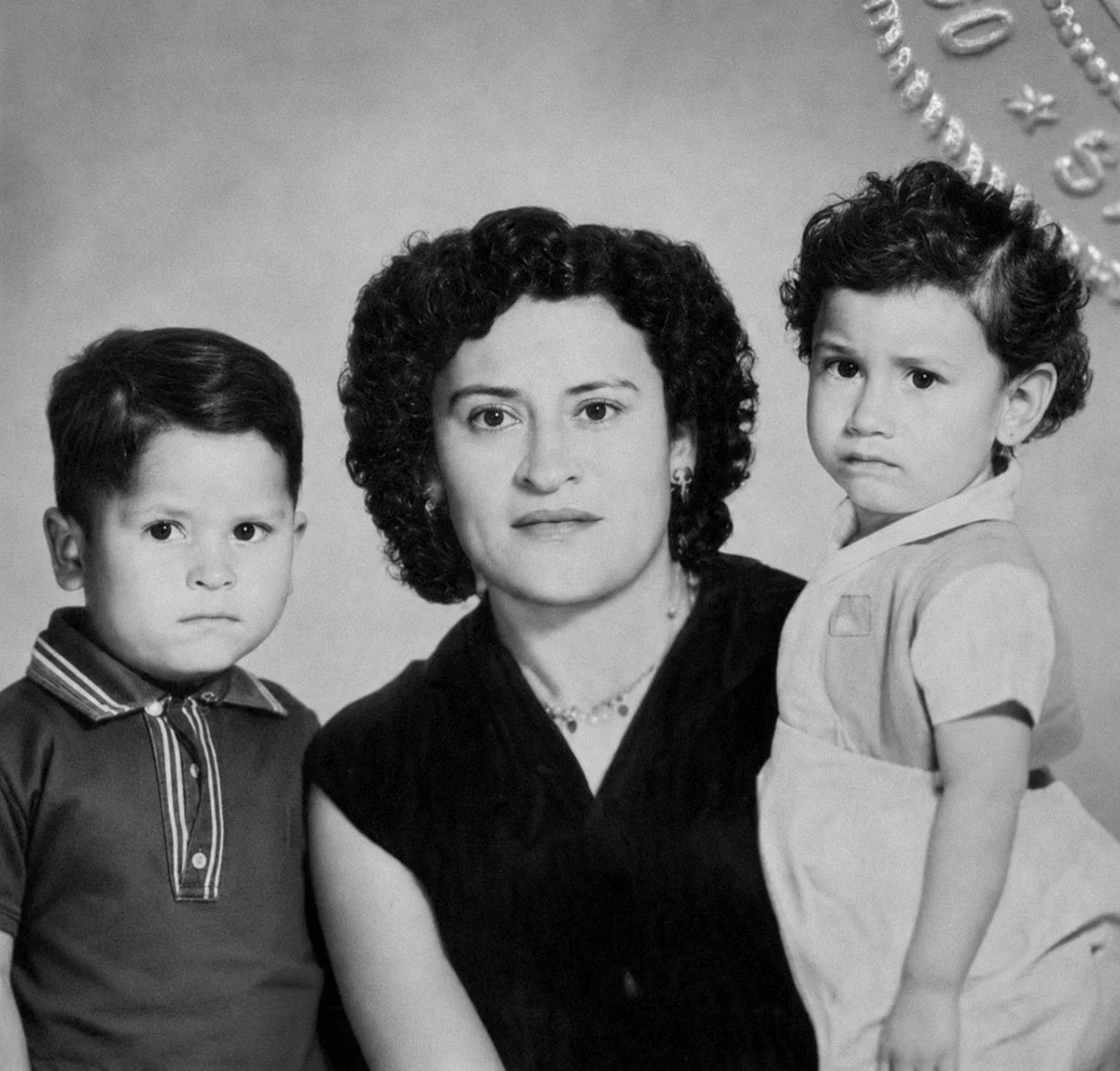
Image of Ernesto (right) with his mother and brother used on the legal entry documents.
Ernesto Olivares was born in San Juan de la Puerta, Guanajuato, Mexico, and came to the United States with his family as a young child. His early life was shaped by the love, sacrifice, and quiet strength of his parents, who brought their family to California in search of a better future.
Ernesto grew up in Colusa, California, in a farmworker family. His childhood was filled with the sounds, smells, and lessons of the fields: prune orchards, walnuts, long workdays, simple meals, a small plywood home, and parents who carried more dreams than resources. His family did not have much money, but they had something powerful: hope, faith in hard work, and a deep belief that each generation should have a chance to go farther than the one before it.
As a boy, Ernesto slowly began to understand that his family was poor. He saw the difference between his life and that of classmates who had nicer clothes, vacations, and opportunities he could barely imagine. But he also saw dignity in his parents’ labor. His father, who had only an eighth-grade education, worked hard to provide for the family. His mother, who did not speak English, held the family together with love, discipline, and sacrifice. Their example became the foundation for Ernesto’s adult life.
His father also taught him that every person mattered, whether rich or poor. He believed dignity did not depend on money, education, title, or status. He believed people had an obligation to help one another, especially those who were struggling. Even when the family had little, Ernesto’s father modeled generosity, fairness, and respect. Those lessons became part of Ernesto’s understanding of leadership: that service is not about standing above others but about standing with them.
One of the most important lessons came from his father’s decision to become a U.S. citizen. When Ernesto was in junior high school, his father began taking citizenship classes. He had always read the newspaper, watched the news on television, and came to believe that citizenship meant having a voice. He wanted to vote.
After becoming a citizen, Ernesto’s father did more than cast a ballot. He took the day off work to volunteer at the polling place, helping voters sign in. He told Ernesto it was his civic duty. That simple act left a lasting impression. For Ernesto, democracy was not an abstract idea. It was his father, a farmworker and immigrant, standing at the polling place because he believed his voice mattered and because he wanted to help others use theirs.
Years later, those childhood lessons would guide Ernesto toward a life of public service. He began his career in law enforcement with the Santa Rosa Police Department in 1979 and retired in 2008 as a police lieutenant. Throughout his career, he worked to strengthen trust between police and the community and became deeply involved in efforts to prevent youth and gang violence.
In 2008, Ernesto was elected to the Santa Rosa City Council. He served three terms, including two years as mayor, making him the city’s first Latino council member and mayor. His public service continued through leadership in community safety, violence prevention, and cross-sector collaboration. He helped launch and lead Santa Rosa’s communitywide violence prevention efforts and later became executive director of the California Violence Prevention Network.
Today, Ernesto serves as a community safety consultant, helping cities and organizations develop comprehensive strategies that integrate prevention, intervention, enforcement, reentry, healing and opportunity. His work is rooted in the belief that safe communities are built on partnership, trust and shared responsibility.
Why This Matters Today reflects the values that shaped Ernesto’s life: compassion, fairness, civic responsibility, and the belief that every person deserves a chance to belong. His writing draws on lived experience as an immigrant child, farmworker, police officer, civic leader, mayor, and mentor and advocate for safer communities.
At its heart, Ernesto’s story is about inheritance — not wealth or property, but hope. The hope his parents carried across a border. The hope his father found in citizenship and voting. The hope found in the belief that everyone matters. And the hope that education, service, and compassion can open doors for the next generation.
That inheritance continues to guide Ernesto’s work and writing today: the belief that every community, no matter how divided or challenged, can still choose a better path forward.